Cherokee Nation

 Subject
Subject Source: Local sources
Scope Note: "Cherokee Nation is the sovereign government of the Cherokee people. We are the largest of three federally recognized Cherokee tribes and are based in Tahlequah, Oklahoma, the capital of the Cherokee Nation. Our headquarters are located in the historic W.W. Keeler Tribal Complex, with sub-offices and service sites throughout Cherokee Nation’s 14-county reservation area. Originally located in the southeastern United States in parts of Alabama, Georgia, Tennessee, and North Carolina, the Cherokee Nation was forced to relocate to Indian Territory (present-day Oklahoma) in 1838 after gold was discovered in our homelands. The thousand-mile forced removal became known as the “Trail of Tears” and came at a cost of nearly 4,000 Cherokee lives through sickness and harsh travel conditions. Today, Cherokee Nation is one of the largest employers in northeast Oklahoma and is the largest tribal nation in the country. As the governing body of the Cherokee people, the Cherokee Nation has the right to structure its own government and constitution; make and enforce its own laws; regulate business, land, environment, and wildlife; and impose taxes within the Cherokee Nation’s jurisdiction." - Cherokee Nation website, 05-12-2026

Found in 50 Collections and/or Records:

1953 Correspondence Regarding Otoe-Missouria Tribal Council Election Procedures, 1953-11-10

 Item — Box 12: Series CAC_CC_004_2_0000_0000_0000, Folder: 18
Identifier: CAC_CC_004_2_12_18_0002

Additional Marked-up Copy of Correspondence Regarding Consideration of a Proposed Change in the Definition of "Indian", 1976-03-18 - 1976-03-22

 Item — Box DP 140: Series CAC_CC_001_4_0000_0000_0000, Folder: 39
Identifier: CAC_CC_001_4_140_39_0007
Scope and Contents

The document contains a marked-up copy of a letter from the Secretary of the Interior to Chairman Robert E. Hampton of the United States Civil Service Commission requesting a modification in the definition of "Indian" for the purpose of implementing a preference in employment of "Indians."

Dates: 1976-03-18 - 1976-03-22

Amended Final Award in Cherokee Nation v. United States, 1972-02-02 - 1973-05-30

 Item — Box 38: Series CAC_CC_109_5_0000_0000, Folder: 10
Identifier: CAC_CC_109_5_38_10_0040
Abstract

93rd Congress (1973-1975)

Dates: 1972-02-02 - 1973-05-30

Attorneys' Fees Awarded in Cherokee Nation v. United States, March 12, 1963

 Item — Box DP 47: Series CAC_CC_001_4_0000_0000_0000, Folder: 46
Identifier: CAC_CC_001_4_47_46_0002

Bureau of Indian Affairs Public Hearing Invitation to Speaker of the House, 1975-05-27

 Item — Box DP 132: Series CAC_CC_001_4_0000_0000_0000, Folder: 2
Identifier: CAC_CC_001_4_132_2_0010
Scope and Contents

The document contains a letter from the United States Department of the Interior Bureau of Indian Affairs Acting Area Director inviting Congressman Carl Albert to attend a public hearing with Indian leaders on June 2, 3, and 4 at the Cherokee Tribal Complex in Oklahoma. An agenda for the hearing is attached.
Dates: 1975-05-27

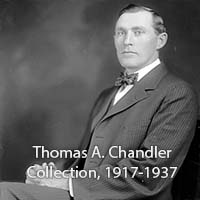
Thomas A. Chandler Collection

 Collection
Identifier: CAC-CC-011
Scope and Contents

The Chandler collection is small and fragmentary and does not reflect his activities in the U.S. Congress. For the most part, the 300 documents in the collection are constituent correspondence from 1917-1919. Some of the topics included in the materials are military conscription, Native Americans, drought relief, anti-lynching laws, the League of Nations, and the Panama Canal.

Dates: 1917-1937; Majority of material found in 1917-1919

Cherokee Nation v. United States: Attorney Fee Dispute, March 26, 1964

 Item — Box DP 47: Series CAC_CC_001_4_0000_0000_0000, Folder: 46
Identifier: CAC_CC_001_4_47_46_0003

Congressman Carl Albert Announced Legislation to Protect Restricted Native American Lands, 1953

 Item — Box SP 1: Series CAC_CC_001_16_0000_0000_0000, Folder: 69
Identifier: CAC_CC_001_16_1_69_0001
Scope and Contents

Congressman Carl Albert announced his intention to introduce legislation during the first session of the 54th Congress to extend restrictions on Native Americans of the Five Civilized Tribes of one-half or more Native American blood. The bill would continue existing policy to protect restricted Native Americans against the sale, lease, or encumbrance of their restricted lands during the life of the allottees or purchasers.

Dates: 1953

Copy of Correspondence from Karl A. Funke Regarding Proposed Definition Change, 1976-04-01 - 1976-04-06

 Item — Box DP 140: Series CAC_CC_001_4_0000_0000_0000, Folder: 39
Identifier: CAC_CC_001_4_140_39_0006
Scope and Contents The document contains correspondence from Karl A. Funke, Specialist of the Task Force on Indian Law Revision of the American Indian Policy Review Commission, to Chairman Robert E. Hampton of the United States Civil Service Commission regarding a proposed change in the definition of “Indian” for preference for employment. Included is a letter from Funke to Reid Chambers, Associate Solicitor for Indian Affairs at the Department of the Interior, regarding preference for employment for members...
Dates: 1976-04-01 - 1976-04-06