
Infrastructure (Economics)--Government policy--United States
Subject
Subject Source: Local sources
Scope Note: "Infrastructure is a critical factor in the modern economy, enabling private businesses and individuals to produce goods and services more efficiently. With respect to overall economic output, increased public infrastructure spending generally leads to higher economic output in the short term by stimulating demand and in the long term by increasing overall productivity. The short-term impact on economic output largely depends on the type of financing (whether deficit-financed or deficit-neutral investment) and the state of the economy (whether in a recession or expansion). The long-term impact on economic output is also affected by the method of financing, due to the potential for "crowding out" of private investment when investments are deficit financed. Economists also expect the type of infrastructure—whether in roads, railways, airports, utilities, or public buildings—to affect the impact on economic output." - L. R. Weinstock, Congress.gov, 2021-11-29
Found in 1 Collection or Record:
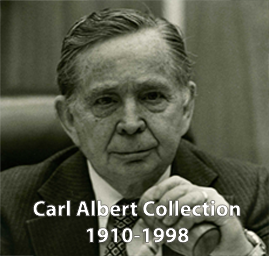
Carl Albert Collection
Collection
Identifier: CAC-CC-001
Scope and Contents
From 1947-1977, Carl Albert served as the representative of Oklahoma's Third District to the U.S. House of Representatives. During the last three terms, he was the Speaker of the House. Known as the "Little Giant from Little Dixie," Albert held more power than any other Oklahoman. The Albert Collection is the largest held by the Carl Albert Center, and it contains a prodigious amount of material generated and received by Albert's congressional offices. It is mostly comprised of...
Dates:
1910-1998